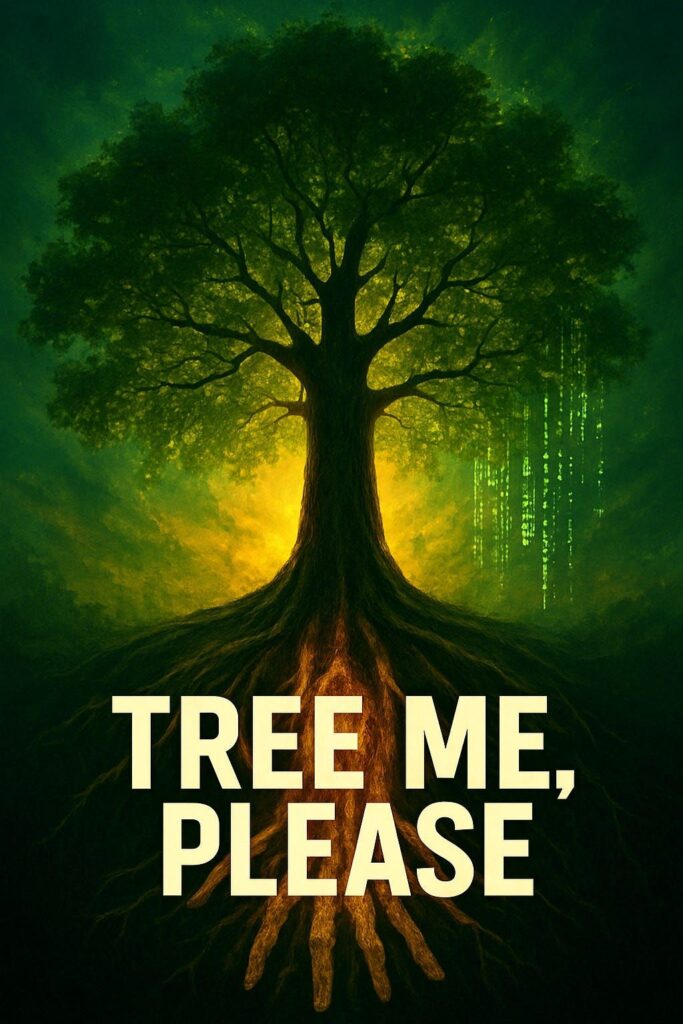
Seeing the endless cascade of headlines each day, I often find myself looking at trees with envy. It might seem strange for a so-called higher form of life to wish for the existence of a tree—life at what we consider the lowest rung of consciousness.
Trees have inhabited Mother Earth long before Homo sapiens ever appeared. We humans—physically humble creatures armed with intellect and cunning—have acquired the power to shape our fates and even the planet’s future. Yet despite all our knowledge and achievements, we have been stockpiling reservoirs of misery and agony. Others have written endlessly about how we reached the apex of human glory; I only wish to confess my own longing: to relegate myself to the life of a tree, which, despite its immobility, has remained resilient against the onslaught of both natural and man-made disasters.
When I was growing up in my hometown, two huge trees stood as landmarks of my childhood. They were similar yet different—one bore fruit, the other offered the coolest shade in summer. My siblings, cousins, and I spent countless hours playing beneath them, feeling their slow, steady breathing. Those trees made me wonder: if they are truly living beings, do they feel pain, sorrow, or the torture of climate change as we do?
We all ask such questions in childhood. But as we grow older, wiser, and more burdened, we forget to wonder. We rarely stop to think about the inner life of a tree—or even about its presence at all.
Living as a conscious being is not easy. We learn about anatomy, culture, relationships, and the vast questions of the universe. But with more awareness comes more worry. Sometimes, to stay sane, we must unlearn the empathy we preach in classrooms and social circles—because the events of the world can break a heart too easily.
We have built magnificent civilizations, yet we remain uncivilized in how we treat our fellow human beings.
So why trees? There are many reasons for my longing to metamorphose into one. Nature is so rich and fascinating that one can’t help but marvel—if only we would pause, step back from our routines, and connect with it rather than the world wide web.
Trees always give. They improve their surroundings, support countless other forms of life, and even in death, they remain useful. They feed the hungry, shelter the vulnerable, hold the soil together, provide wood for warmth and shelter, and—buried deep in the earth—transform into the energy that fuels our lives. Their entire existence, living or posthumous, is defined by generosity, adaptability, and service.
And in return, they ask for so little. Plant a seed, water it for a short while, and the tree will take care of itself. Once independent, it demands nothing—fiercely self-reliant, almost as if it carries a quiet, dignified ego.
Trees never tire of standing in one place. They do not judge, they do not complain; they sway in harmony with the wind, dance with the rain, and endure the fiercest storms. Their existence is a silent embodiment of heavenly attributes.
Human beings—well, not all of us, but enough—often display the opposite traits, even while claiming to be the pinnacle of creation.
Look at a tree long enough, and imagine it as a human being. Your perspective will change. You might find yourself whispering, as I do:
“Tree me, please.”
https://open.substack.com/pub/mubashirsid/p/tree-me-please?utm_source=share&utm_medium=android&r=1y98xa


Leave a Reply