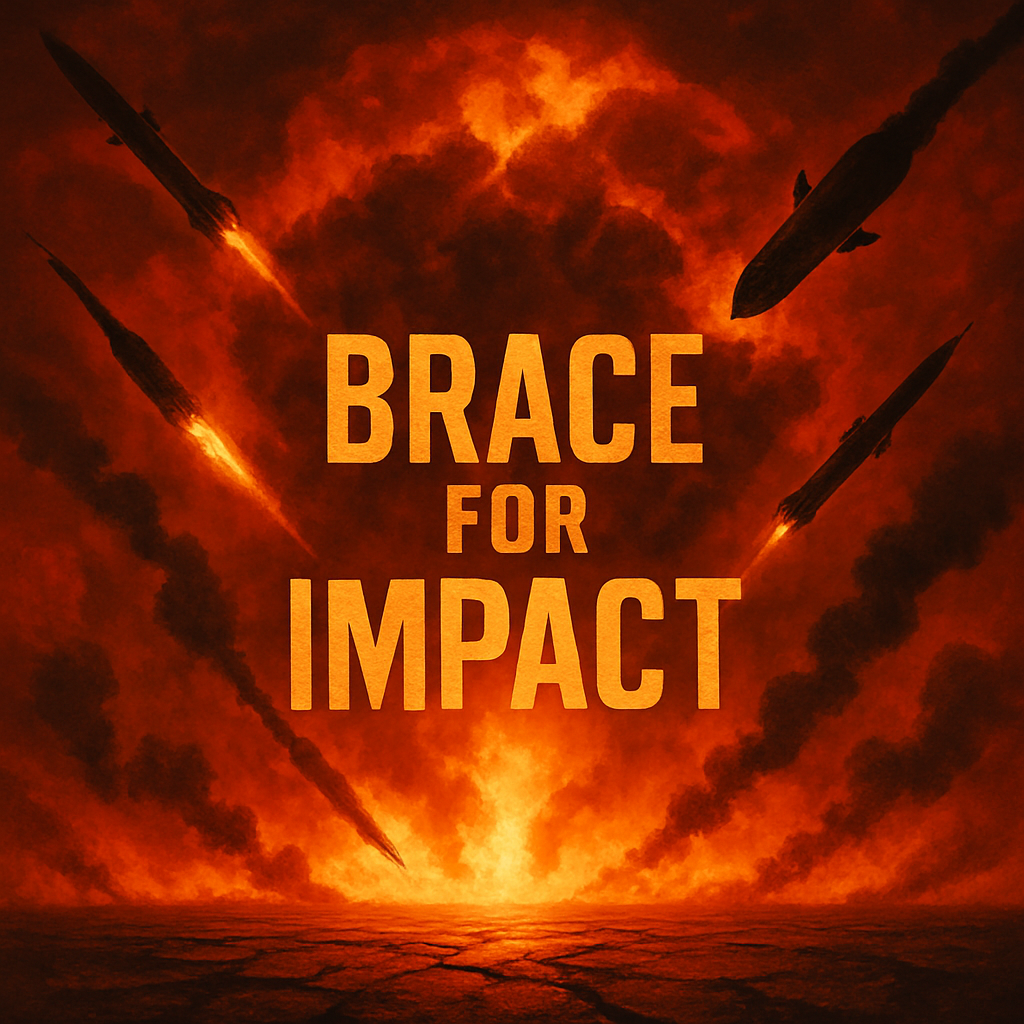
Originally termed holokauston in Greek — meaning “a wholly burnt offering” — the word “Holocaust” once described sacrificial rituals in which the subject was entirely consumed by fire. Like many words, it journeyed through Latin and Old French before entering the English lexicon, gradually transforming into a metaphor for large-scale destruction, especially by fire. Although the term gained some resonance in early to mid-20th century literature, it was only in the wake of World War II that it became historically anchored as the Holocaust — the systematic, state-orchestrated extermination of six million Jews under the Nazi regime.
Yet if we strip the term of its historical capitalization and return it to its raw, original form — annihilation by fire — we are forced to ask: is there a place in today’s world where such a holocaust is not merely remembered but relived?
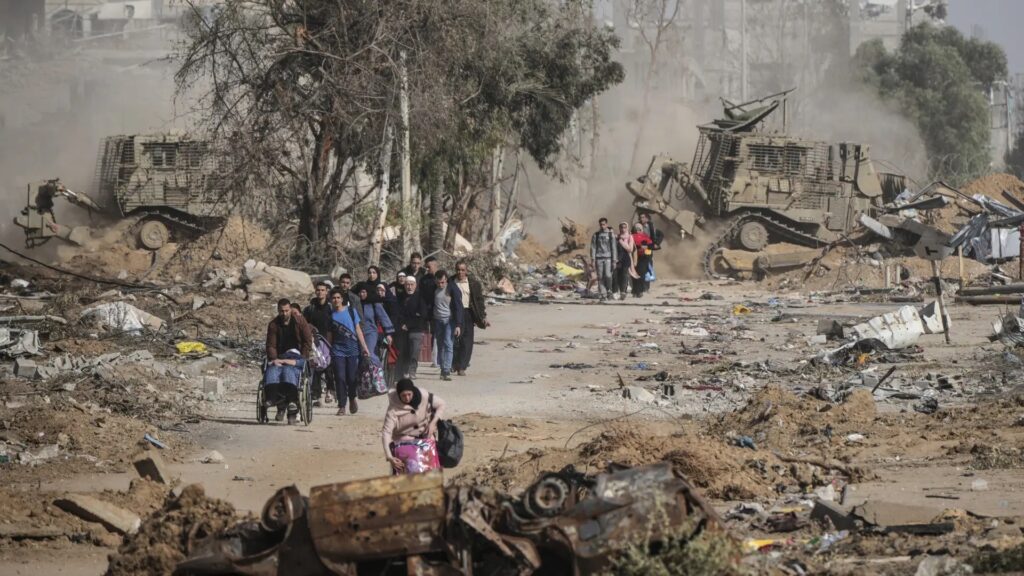
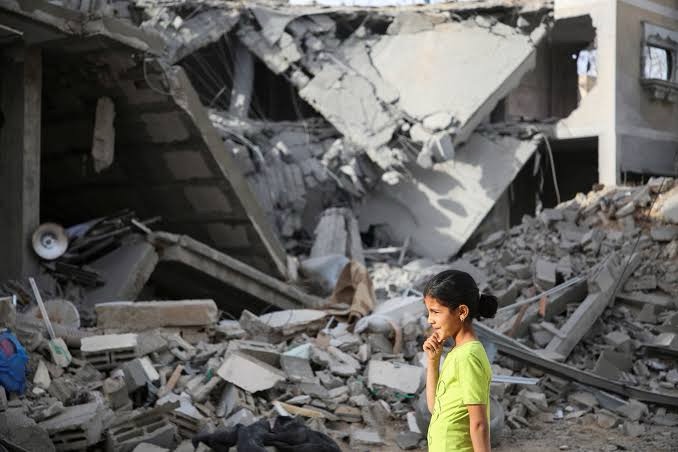
Gaza — once called the world’s largest open-air prison — has now been transformed into an altar of sacrifice. Here, the theatre of death is performed daily, with a script woven from religious ideology, geopolitical stratagems, and security doctrines. The past and present merge so seamlessly that any attempt at a nuanced conversation collapses under the suffocating weight of history and immediacy.
The televised spectacle of genocide, starvation, death, and misery has exposed the gaping chasm between the West’s professed ideals of humanity and its selective application. The deaths of Palestinians have become no more than passing notifications on our devices — stripped of meaning, empathy, or urgency. The collective conscience of humanity has receded, replaced by the cold calculus of national interests. Even sympathizing with the victims threatens to draw the ire of global powers, making silence the preferred currency of survival.
Social media — once hailed as a democratizing force, an amplifier of marginalized voices — has proven impotent. When truths cannot trend, what hope is there for transformation? The promise of global consciousness lies buried beneath algorithms and digital fatigue.
International institutions, particularly the United Nations — once envisioned as guardians of human dignity and cooperation — are now targets of sanction and ridicule. The very founders of the UN, the so-called Big Three, today undermine its credibility with every unfolding crisis. The recent sanctions imposed by the U.S. on UN Special Rapporteur Francesca Albanese — for merely articulating an inconvenient but evident truth — reflect the institutional suppression of moral clarity. Her voice, like so many others, is punished for refusing to look away.
Global competitors to the United States, despite their lofty rhetoric about challenging American hegemony, have been reduced to issuing isolated statements. These remarks, far from altering the geopolitical landscape, barely register as tremors in the global narrative.
Human beings despise injustice — but often not out of noble intent. As Plato records in The Republic, it is mostly the fear that they too may become its victims one day that fuels their moral outrage. Even that necessary resistance to injustice has now faded into the background. We are consumed by our own survival, too preoccupied with personal or national stability to care about those suffering on distant shores.
Morality has always had varied sources — religious, cultural, philosophical — yet some common threads persisted. But now, even these threads are unraveling. For some, morality is dismissed as a mere figment of perspective, a matter of where one stands. Yet there was once near-universal agreement that the deliberate killing, starvation, and mutilation of civilians constituted crimes against humanity. That was true — until Israel began committing these acts. Now it is rebranded as “self-defense.”
I have never seen such a grotesque exploitation of moral language — a complete inversion of ethical principles. The powerful now parade as righteous; the powerless are cast as threats. The innocent die, and the guilty speak in the language of justice.
To insulate myself from the horror, I am expected to surrender my conscience. I must stay silent, for my views threaten the algorithms and risk being erased by the blade of censorship. I cannot speak freely on campus — voicing my beliefs may lead to suspension or even deportation from the United States under the accusation of antisemitism.
So I do what little I can: I write. I document. I bear witness. I record the injustices inflicted upon the innocent in Gaza — not just for today, but for posterity. I cling to the fragile hope that one day this darkness will lift, and the truth will no longer be punished for daring to be seen.
I have reached a grim conclusion, one that echoes the haunting words of Friedrich Nietzsche:
Morality is dead — and we have killed it with our own hands.
By Ertaan Siddiqui
“The writer is a regular columnist on social issues and can be reached at seer42.blog or via email at furian240@gmail.com.”